
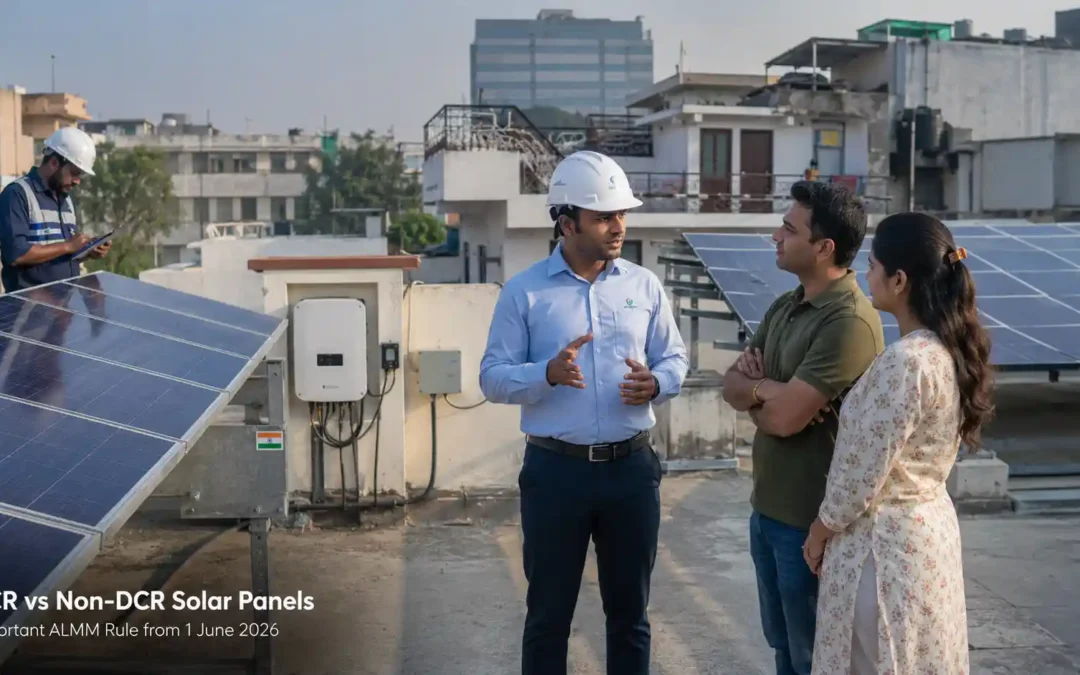
Difference Between DCR and Non-DCR Solar Panels
There is a massive surge in demand for solar products in India, and almost all consumers especially residential and commercial consumers are shifting towards rooftop solar for double advantage of saving on electricity bills and availing govt subsidies.While doing shopping for solar panels, one of the popular question is: What is the difference between DCR and Non-DCR solar panels
It is very important to know the difference between these two kinds of solar panels before installing a solar power system. Your choice will immediately affect how much you can be subsidised, how much your project will cost, the quality of the panels and what you save on them in the long term. In this DCR vs Non-DCR solar panels guide, we will cover everything about DCR vs Non-DCR solar panels such as what does it mean, advantages, disadvantages, pricing, subsidy rules and which one is better for home & commercial use.
What Are DCR Solar Panels?
DCR means Domestic Content Requirement. DCR solar panels are built with solar cells and modules that are Indian made.
The Indian government has enacted DCR norms to incentivize domestic module manufacturing and minimize reliance on imported solar gear.these panels are frequently deployed in solar projects and subsidy schemes that are supported by the government.
The government schemes including PM Surya Ghar Muft Yojana have only approved DCR solar panels for subsidy.
Key Features of DCR Solar Panels
- Solar cells manufactured in India
- Solar modules assembled in India
- Government subsidy eligible
- Mostly used in residential rooftop subsidy projects
- Helps support Indian solar manufacturers
What Are Non-DCR Solar Panels?
What are non-DCR solar panels? DCR and first up - non-DCR panels. Non-DCR panels are Panels which use Imported Solar Cells even though the final assembly is done in India. Most of the imported cells are from China, Vietnam or Malaysia.
These panels are widely used in commercial and private solar installations because they are often more affordable and available in multiple technologies.
Key Features of Non-DCR Solar Panels
- Imported solar cells allowed
- Lower installation cost
- Used in non-subsidy projects
- Available in wider technology options
- Common in commercial solar plants
Difference Between DCR and Non-DCR Solar Panels
Here is a simple comparison between DCR and Non-DCR solar panels:
| Feature | DCR Solar Panels | Non-DCR Solar Panels |
|---|---|---|
| Manufacturing | Indian cells + Indian modules | Imported cells allowed |
| Government Subsidy | Eligible | Usually not eligible |
| Cost | Higher | Lower |
| Availability | Limited brands | More options available |
| Usage | Government & residential subsidy projects | Commercial & private projects |
| Import Dependency | No | Yes |
| Popularity | Growing rapidly | Common in open market |
Why Are DCR Solar Panels Important?
The Indian government is actively promoting local solar manufacturing through initiatives like:
- Make in India
- PM Surya Ghar Yojana
- ALMM regulations
- Domestic manufacturing incentives
DCR panels help strengthen India’s solar manufacturing sector while ensuring better quality control for subsidy projects.
Today, many DISCOM-approved rooftop solar projects require ALMM-approved DCR solar panels for subsidy approval.
Role of ALMM in Solar Panels
ALMM stands for Approved List of Models and Manufacturers.The Ministry of New and Renewable Energy (MNRE) introduced ALMM rules to ensure quality standards in India’s solar sector.
Today, many subsidy projects require:
- ALMM-approved solar panels
- DCR-compliant modules
This is why homeowners should always verify whether their installer is using approved solar panels.
Pros & Cons Breakdown
Advantages of DCR Solar Panels
1. Eligible for Government Subsidy
The biggest advantage of DCR solar panels is subsidy eligibility. If you want to claim central government solar subsidy benefits, DCR panels are usually mandatory.
2. Supports Indian Manufacturing
Using DCR panels helps Indian solar companies grow and reduces dependence on imported products.
3. Better Compliance in Government Projects
Government tenders and subsidy programs often require DCR-approved solar modules for project approval.
4. Reliable for Long-Term Projects
Most approved DCR brands follow strict quality standards and certifications.
Disadvantages of DCR Solar Panels
1. Higher Price
DCR panels are generally more expensive than Non-DCR panels because Indian solar cell manufacturing is still developing.
2. Limited Brand Choices
Compared to imported options, there are fewer manufacturers available in the DCR category.
3. Technology Availability
Sometimes advanced technologies become available in imported panels earlier than domestic ones.
Advantages of Non-DCR Solar Panels
1. Lower Cost
Non-DCR panels are usually cheaper because imported cells are available at competitive prices.
2. More Technology Options
You can find a wider range of technologies like:
- TOPCon
- Mono PERC
- Bifacial modules
- High-efficiency panels
3. Better Availability
Non-DCR panels are widely available in the market through multiple manufacturers and distributors.
Disadvantages of Non-DCR Solar Panels
1. No Subsidy Benefit
Most government subsidy programs do not allow Non-DCR panels.
2. Import Dependency
These panels depend heavily on imported solar cells and global supply chains.
3. Government Restrictions
With new ALMM and import regulations, future availability and pricing may change.
Which Is Better: DCR or Non-DCR Solar Panels?
The answer depends on your project requirements.
Choose DCR Solar Panels If:
- You want government subsidy
- Installing residential rooftop solar
- Applying under PM Surya Ghar Scheme
- Need DISCOM approval
Choose Non-DCR Solar Panels If:
- Subsidy is not required
- You want lower upfront cost
- Installing a commercial solar plant
- Looking for more technology options
DCR vs Non-DCR Solar Panel Price Difference
The price difference between DCR and Non-DCR panels changes depending on market conditions and technology type.
Generally:
- DCR solar panels cost slightly higher
- Non-DCR panels are more budget-friendly
However, if you receive government subsidy with DCR panels, the overall system cost can become more affordable in the long run.
Conclusion
It is important to know the distinction between DCR and Non-DCR solar panels before you buy a solar system. DCR panels are suitable for residential projects under subsidies schemes whereas Non-DCR panels are applicable for private and commercial projects without subsidies.
Before selecting solar panels, always consider:
- Government subsidy eligibility
- Budget
- Panel quality
- Brand reputation
- ALMM approval
- Long-term savings
Choosing the right solar panel can help maximize your return on investment and ensure reliable solar performance for years.
Frequently Asked Questions (FAQs)
1. What does DCR mean in solar panels?
DCR stands for Domestic Content Requirement, meaning the solar cells and modules are manufactured in India.
2. Are DCR solar panels mandatory for subsidy?
Yes, in most government rooftop solar subsidy schemes, DCR solar panels are mandatory.
3. Which is cheaper: DCR or Non-DCR panels?
Non-DCR solar panels are generally cheaper than DCR panels.
4. Can I get subsidy on Non-DCR solar panels?
Usually no. Most subsidy programs require DCR-approved panels.
5. Are Non-DCR solar panels good quality?
Yes, many Non-DCR panels offer excellent efficiency and performance, especially imported premium modules.
6. What is the difference between ALMM and DCR?
DCR relates to Indian manufacturing requirements, while ALMM is the government-approved list of solar manufacturers and models.
7. Which solar panel is best for residential rooftop systems?
For residential rooftop systems with subsidy benefits, DCR solar panels are usually the best choice.
8. Are DCR solar panels more expensive?
Yes, DCR panels generally cost more due to domestic manufacturing costs.
9. Can commercial projects use DCR panels?
Yes, but most commercial projects prefer Non-DCR panels because of lower costs.
10. How do I verify whether a panel is DCR or Non-DCR?
You can check the manufacturer specifications, MNRE certifications, or ask your solar installer for documentation.